

Walls of Public Life, Seoul Biennale, South Korea
2025
Project Team: Anupama Kundoo, Nishanti Srinivasan, Sonali Phadnis, Alba Sans Morcillo
Curated by : Heatherwick Studio
With the support of Seoul Metropolitan Government, Humanise Org, poly.m.ur, Joosung Design Lab
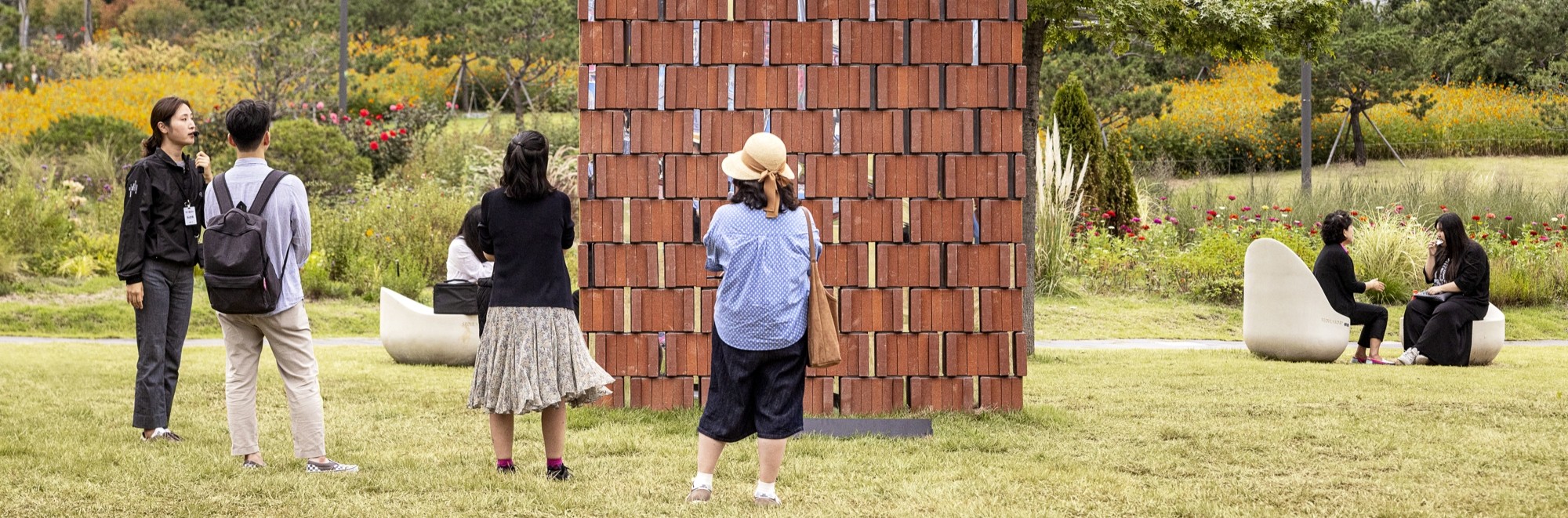
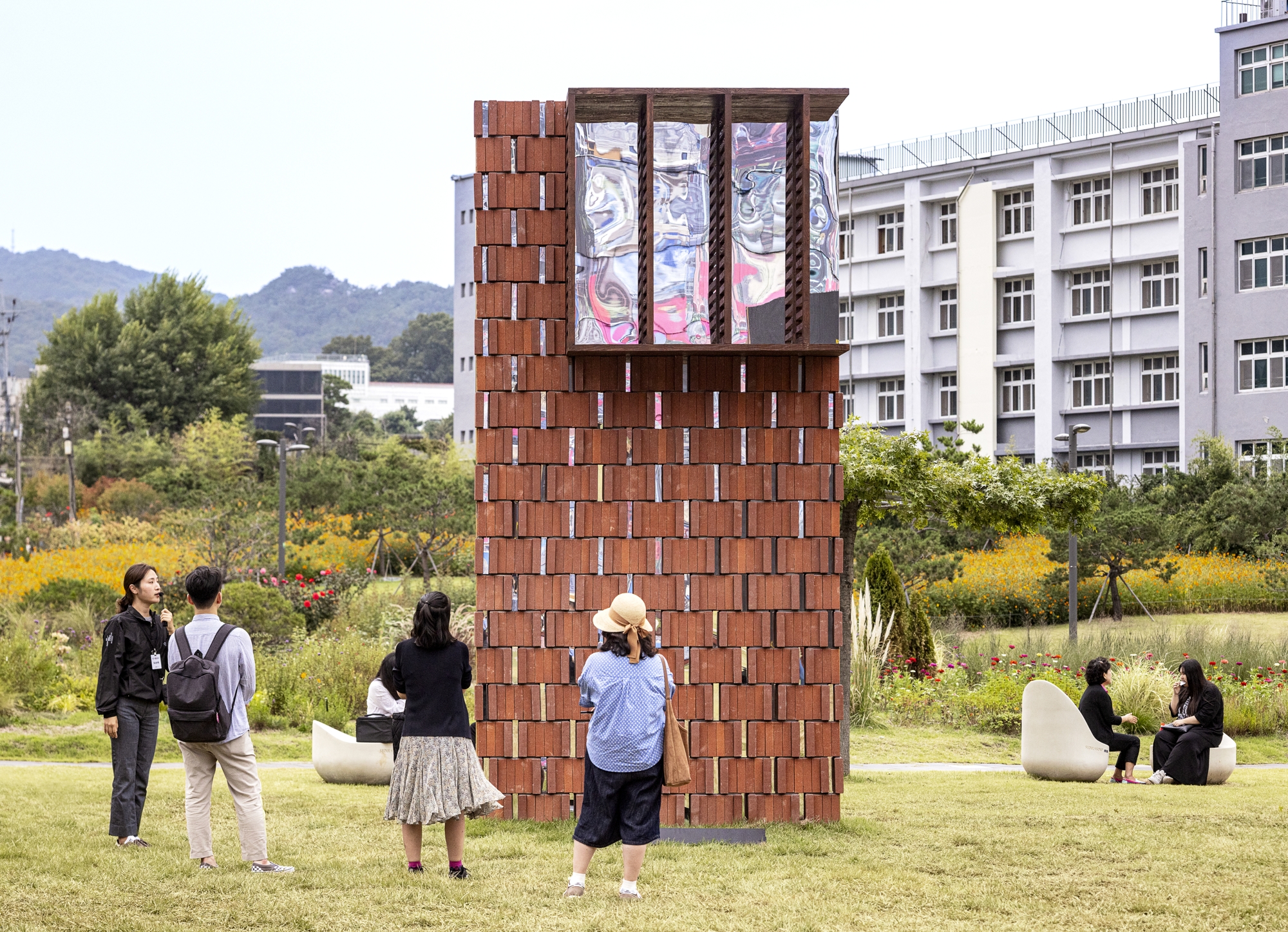
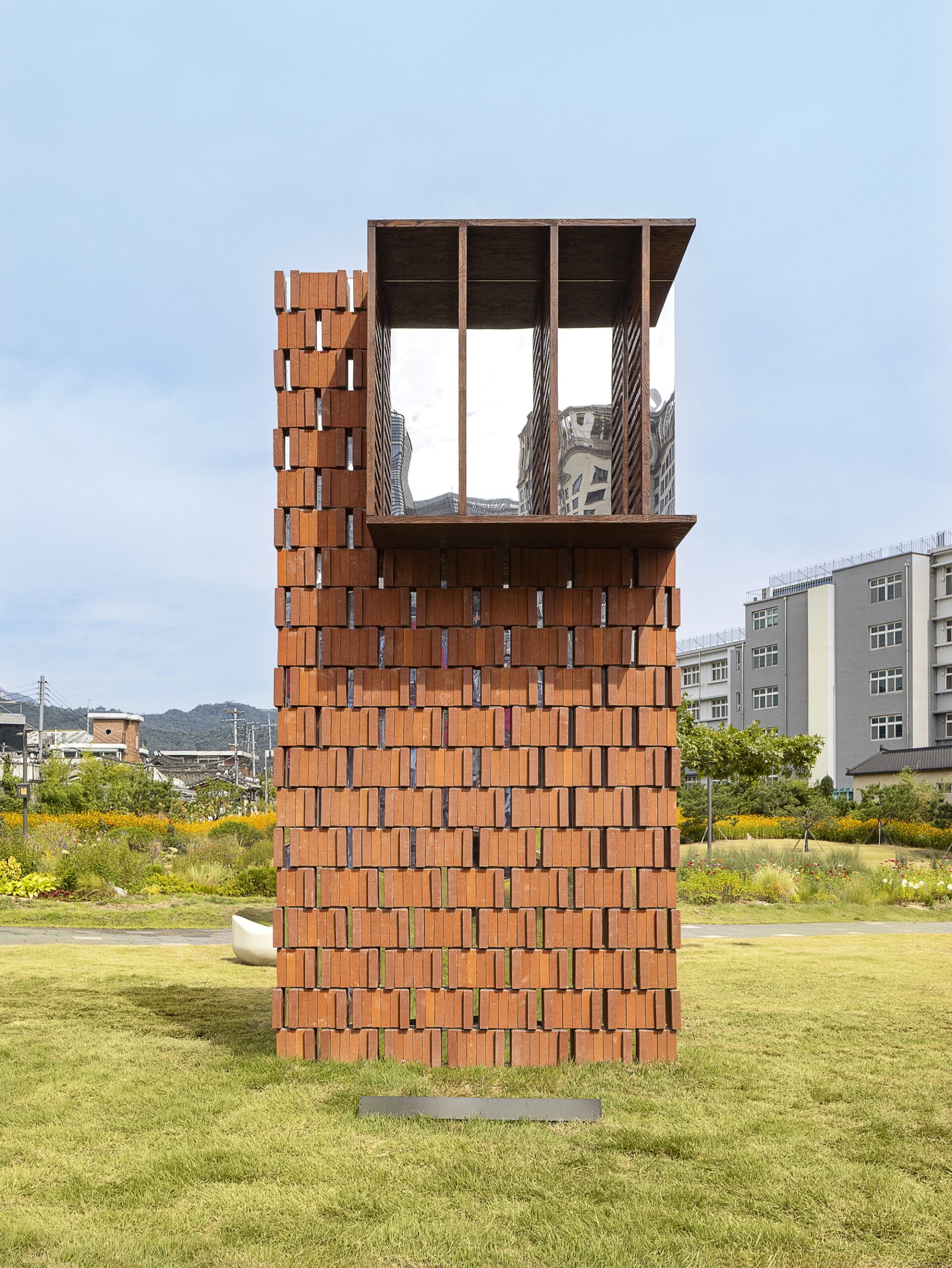
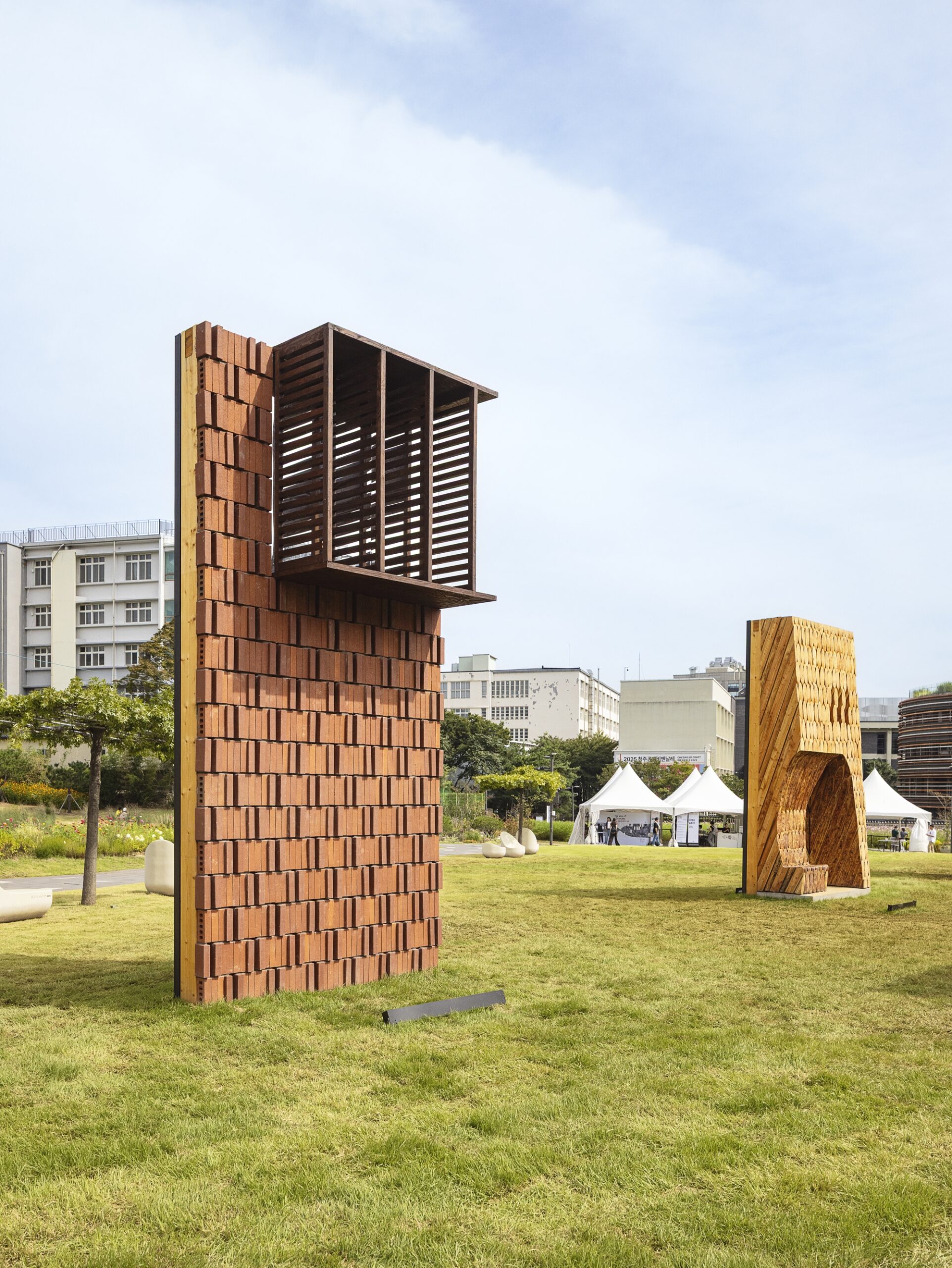
‘Let it Breathe’ is an installation designed for the Walls of Public Life at the Seoul Biennale, 2025. The walls are a series of 2.4m x 4.8m fragments of larger facades. Being made with real materials, at 1:1 scale, they emulate the walls that one would encounter in their day-to-day life, and seek to create these walls in a radically human way.
Post industrial construction of architecture increasingly involves “curtain wall” systems, often using glass, resulting in insulated environments. “Let it Breathe”, on the contrary, illustrates that despite other functions that a wall must deliver, it must enable the flow of air. The wall is thus porous, enabling the interiors to breathe.
Since architecture has existed, walls were also regulators of thermal comfort, relying on passive cooling and heating based on the sun’s orientation. “Let it Breathe” expresses the continued requirement of architecture to deliver climatic comfort for the inhabitants with minimal reliance on energy consumption. Acknowledging that architectural interiors involve the act of breathing, walls must also regulate interaction with the outside environment through designing the porosity according to the climatic context. Rather than a mere skin, the wall is load bearing, using the heavy mass of its material as a climate strategy, it further provides the thermal mass to protect inhabitants. The desired porosity provides the opportunity to express ornamentation, humanising the wall.
In the context of fast paced modern life, the wall is deliberately a representation of slow architecture that is well crafted. Architecture that has an abundance of texture and intricate details celebrating the human hand becomes a refuge. Architecture outlives humans. Its relevance must sustain regardless of passing fashions. The oversimplification of modernist principles on one hand and industrial mass production of building elements on the other hand have led to monotony and loss of human scale and identity, adding to the growing loneliness of urban environments.
“Let it Breathe” celebrates the thinking hand. Being made with materials that contain the human fingerprint, the wall therefore becomes radically more human. Through the conscious use of local materials, the expertise of artisans, and contemporary ornamentation, the wall offers a tactile experience for all passersby, creating a human scale experience. The stone projection indicates a balcony that protects from rain and harsh sun and invites passersby to take shelter. Two scales of openings are employed. On the upper level, the large opening simulates part of a window, defined by fins to modulate the amount of light and air entering the space. On the ground floor, the wall is treated more as a filter, using fine perforations to enable porosity.
The wall, and by extension, the facade, act as an interface between the city and its inhabitants, serving as a mediator between these two. In a post colonial context, rather than shifting materials over continents through extractive supply chains, the design builds upon generations of skills and knowledge of local materials. It is a contemporary expression of an architecture that remains rooted to its local context by using old, time tested materials but in new ways. Negotiating the man-made and machine-made in an optimum balance, “Let it Breathe” expresses human ingenuity from an architectural to a city scale. Rather than neglecting the ordinary aspects of architecture, the installation seeks to elevate the banal through paying attention. Good architecture makes the ordinary extraordinary.
Image credits: Yongjoon Choi
© Yongjoon Choi
Category:
Installations